

Craftsmanship
The Art of Bespoke Tailoring: From First Measurement to Final Stitch
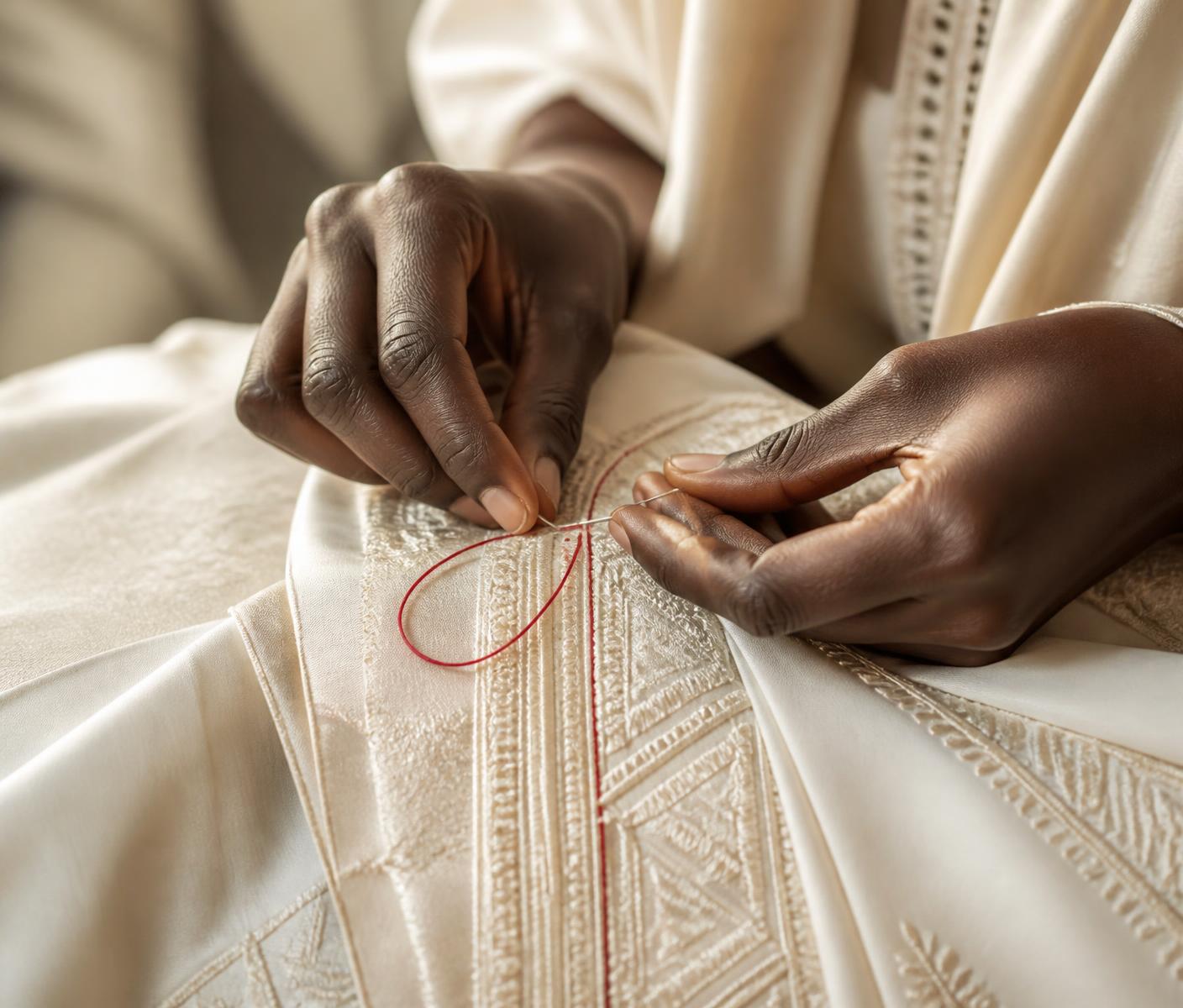
A bespoke garment begins long before any fabric is cut. It begins with a conversation — about the occasion, the body, the life the garment will live. At NADA CAIRO, this first exchange often happens over WhatsApp or in the Paris atelier, and it is deliberately unhurried: the right questions at the start save weeks of correction later.
Measurement is the second act, and it is closer to cartography than arithmetic. Beyond the standard numbers, the atelier records how a client stands, how she carries her shoulders, which side she favours when she walks. Two women with identical measurements can require entirely different constructions — bespoke exists precisely because bodies are not averages.
Then comes the toile: a first version of the garment built in plain cotton, fitted on the body and taken apart again. This is where the silhouette is argued with. A neckline is raised by three millimetres. A sleeve is rotated so it falls cleanly when the arm lifts. Nothing here is glamorous, and everything here is decisive — the difference between a dress that fits and a dress that belongs to you.
Only then is the real fabric cut. Sudanese silks, French lace, embroidered organza — each behaves differently under the needle, and each is given its own time. Hand-finishing follows: hems rolled by hand, beadwork placed one stone at a time, seams pressed and re-pressed until they disappear. A single evening piece can carry over a hundred hours of handwork.
The final fitting is a quiet ceremony. The garment is worn, walked in, sat in. Small adjustments are marked and made, and then the piece is rested, pressed one last time and delivered. What the client receives is not a product but a document — of her measurements, her choices, and the hands that made it.
This is why bespoke tailoring cannot be rushed, and why it cannot be mass-produced. Every NADA CAIRO piece is made for one woman, once. When it is worn, it does not announce the designer — it announces the wearer.